Zoic Design
Fossils in interior design: the Zoic Design project
Zoic Design was born from a long-held belief:
fossils in interior design are not decorative objects, but generative elements of space.
Some objects cannot simply be placed in a space. They must be understood before they are even designed.
Zoic Design was born out of this conviction.
It is not a collection.
It is not a product line.
It is a journey that explores how an authentic fossil can become the origin of a project.
Each fossil is an unrepeatable object. It carries with it a deep time, a material that cannot be replicated, a form that is not born of design but of natural history. Designing around it means accepting its complexity, listening to its proportions, constructing a space that does not overpower it but interprets it.
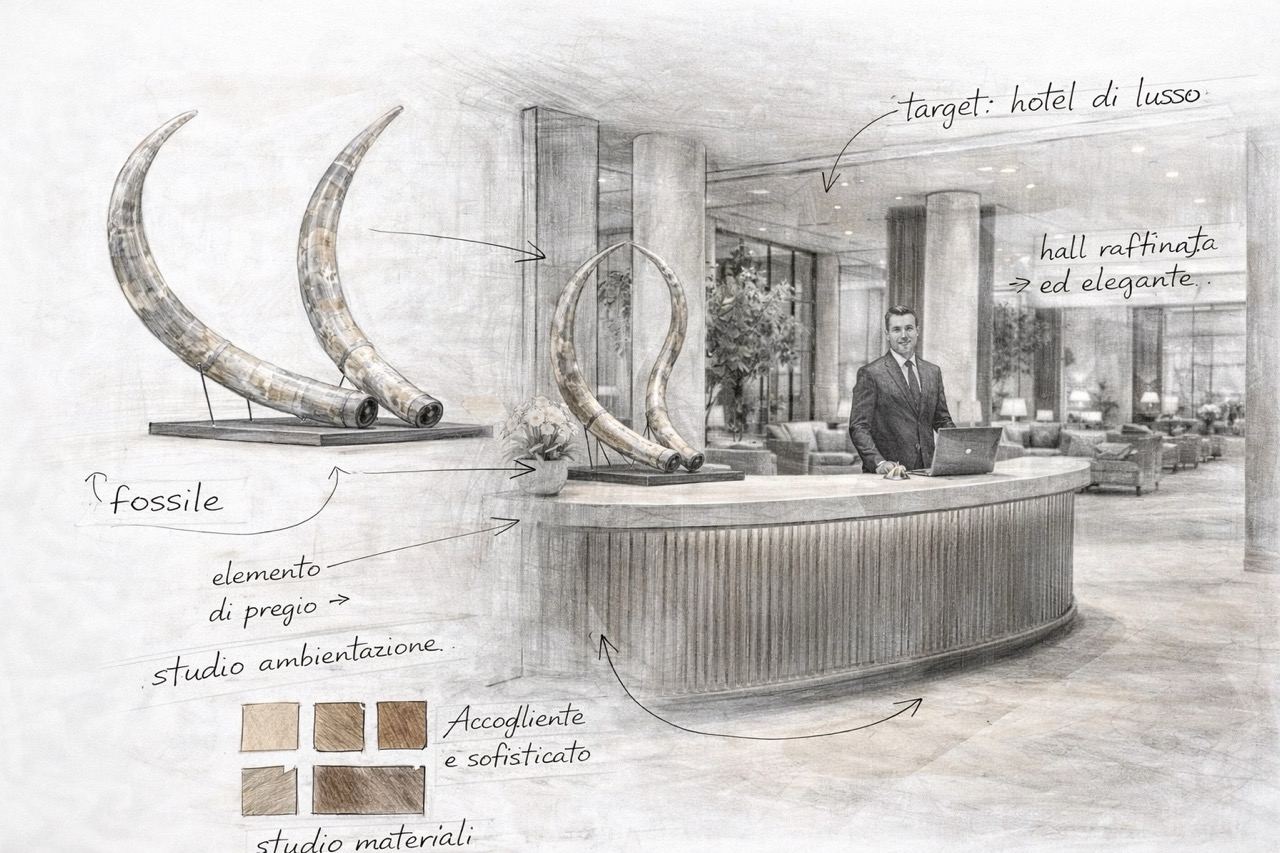
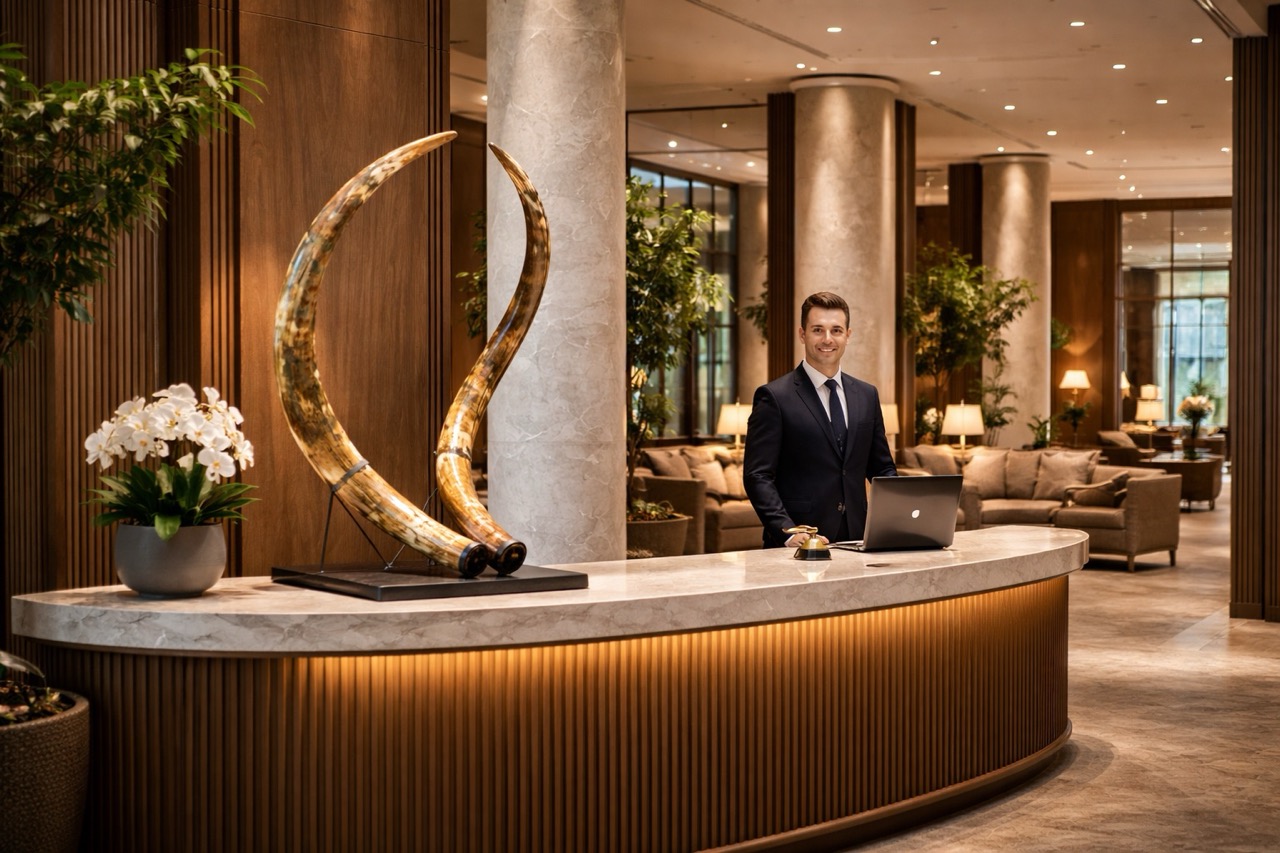
The visual and symbolic power of these finds makes them suitable not only for permanent living contexts, but also for temporary spaces: exhibition displays, showrooms dedicated to design, site-specific installations. In these contexts, the fossil becomes a catalyst for attention and dialogue, capable of activating new ways of relating between object, space and audience.
Zoic Design remains deliberately open. It does not define a style, but a method.
It is a place for experimentation and discussion for those who choose to deal with complexity as an integral part of the creative process.
An object that does not repeat itself
Each fossil is unrepeatable.
The form, matter, and traces of time cannot be replicated or standardized.
That is why the design does not start from the space, but from the object.
In Zoic Design, the fossil is not a decorative element.
It is the generative principle that directs proportions, materials, light, and atmosphere.
Space is built around its presence.
Our role
Zoic Design does not develop executive interior design projects.
Our work is located upstream of the design process.We do not define the aesthetics of the project.We offer the designer the opportunity to choose, from authentic and certified fossils, the element most consistent with his or her vision.
Our scientific and laboratory experience allows us to work alongside him or her with technical awareness and deep knowledge of the subject matter, without replacing his or her design sensibility.
Authentic objects, stories that continue
All fossils offered within Zoic Design are authentic and accompanied by certifications and documentation.
But what really matters is their story.
A story that continues in the space that welcomes them.
An as yet unexplored territory
Consciously integrating authentic fossils into contemporary environments moves in an area that is still poorly codified.
There are no serial models.
There are no standard solutions.
Every intervention requires vision, sensitivity and dialogue between different skills.
Customized design for temporary and permanent spaces
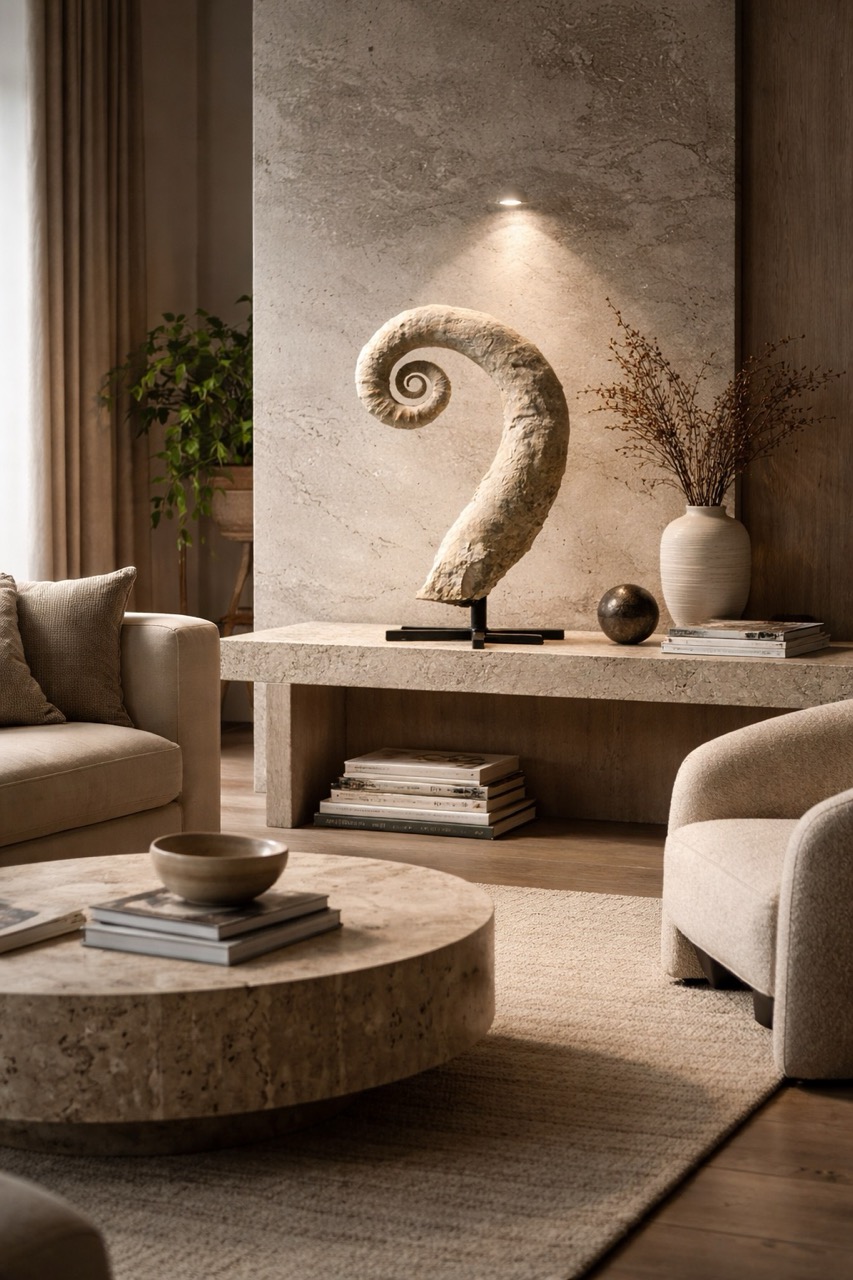
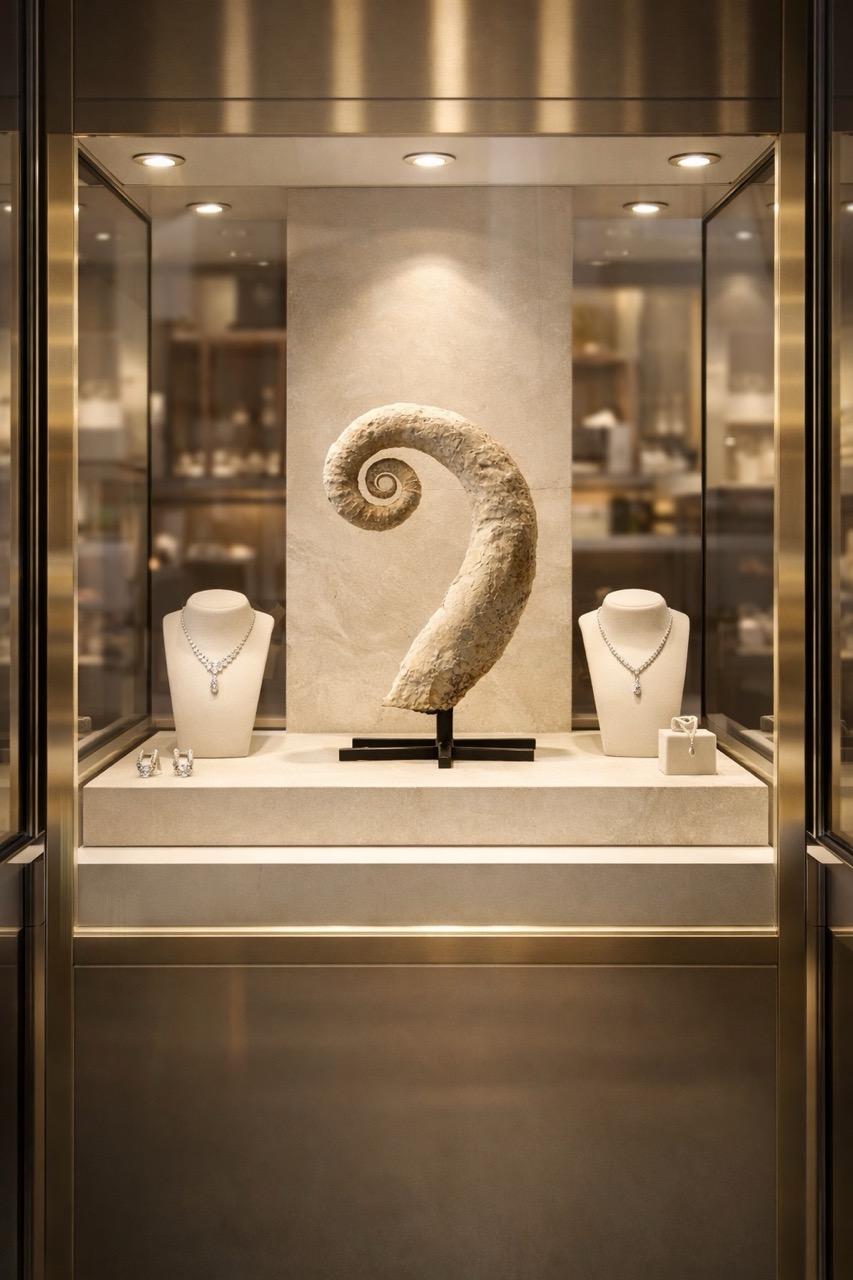
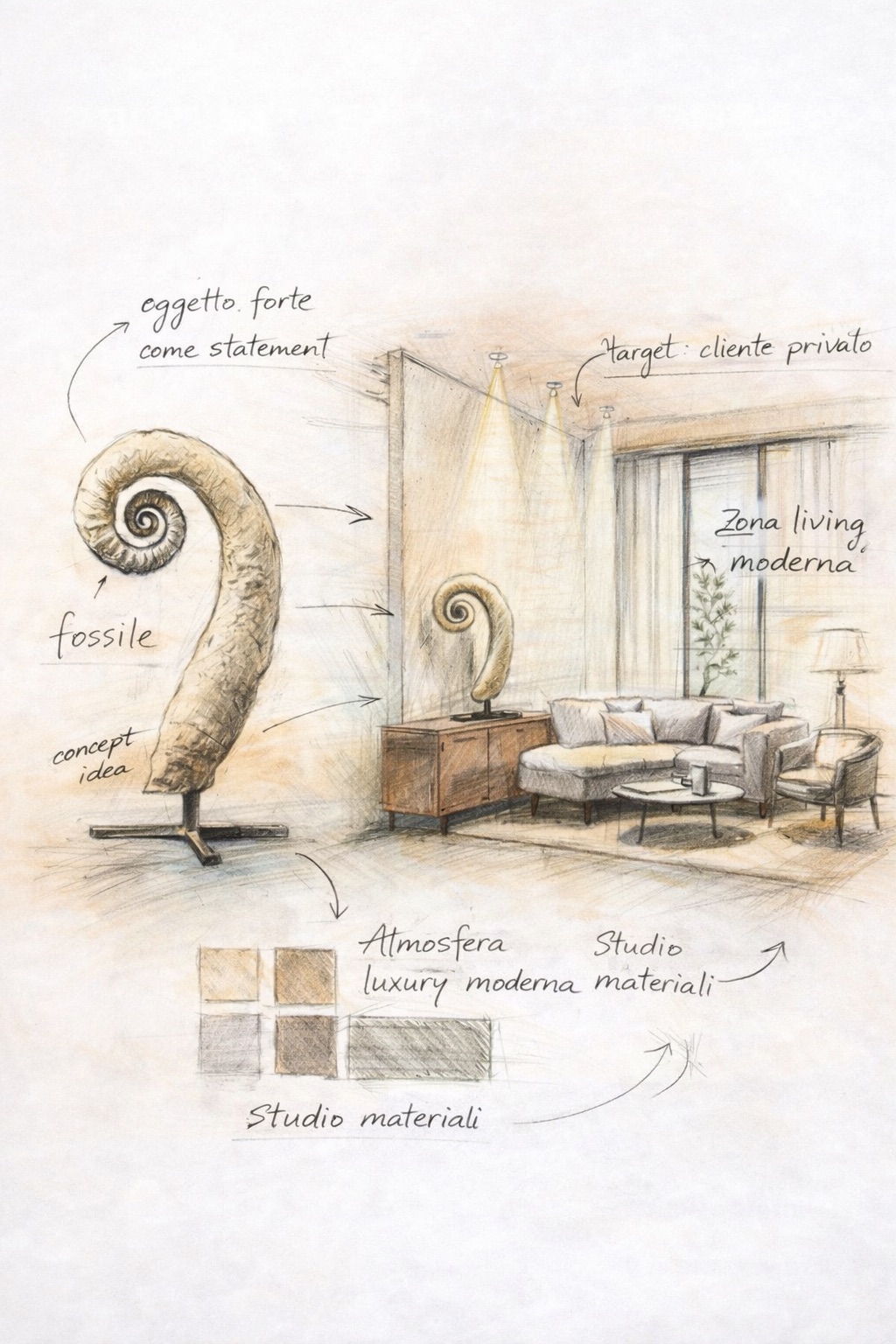
Acrioceras sp.
Lower Cretaceous, France
Heteromorphic Ammonite from the Barremian (ca. 125-130 million years ago), recognizable by its open and elegant shape: a compact first spiral that develops into a curved hook-like trend. It originates from the fossiliferous areas of southern France, particularly the Provence-Alpes-Côte d'Azur, l'Acrioceras is appreciated for its strong sculptural value. Its dynamic and light lines make it an ideal element for various design settings, where the fossil becomes a formal gesture and focal point of the space. .
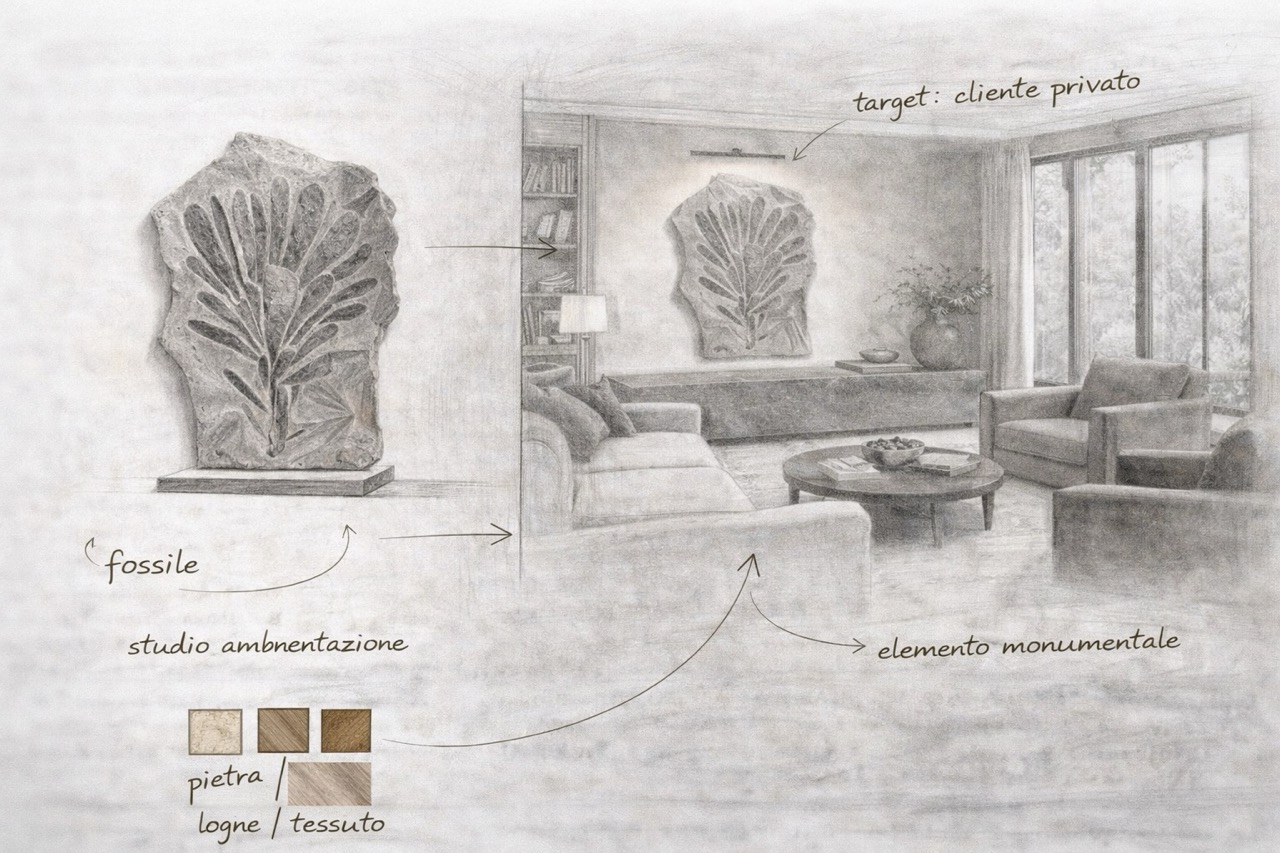
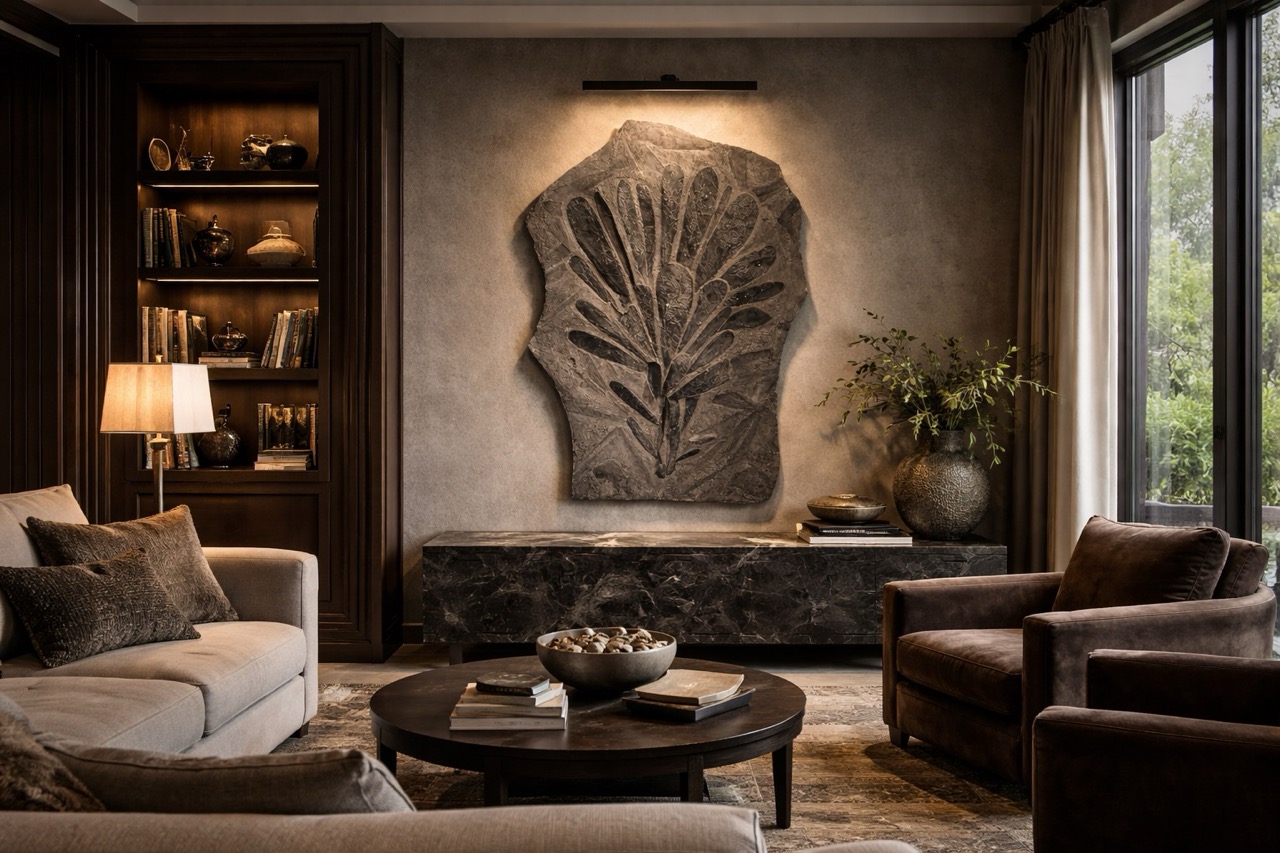
Cordaites sp.
Carboniferous forests
Fossil remains of ancient tree plants that dominated the Earth's landscape between 355 and 290 million years ago. I Cordaites formed immense forests, now largely transformed into major coal deposits. Their linear and rhythmic structures restore an essential and powerful aesthetic, where geological time becomes visual matter and a design element, capable of giving depth and character to contemporary space.
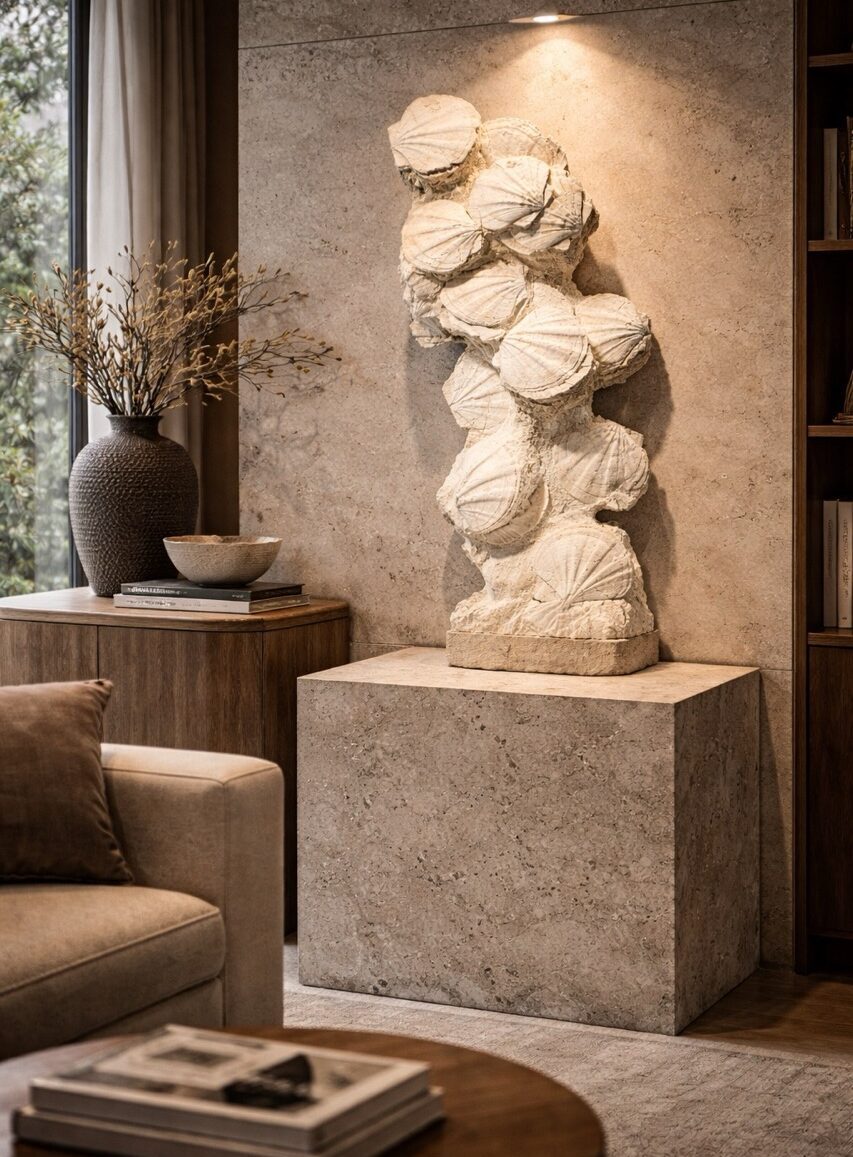
Gigantopecten
Oligocene, France
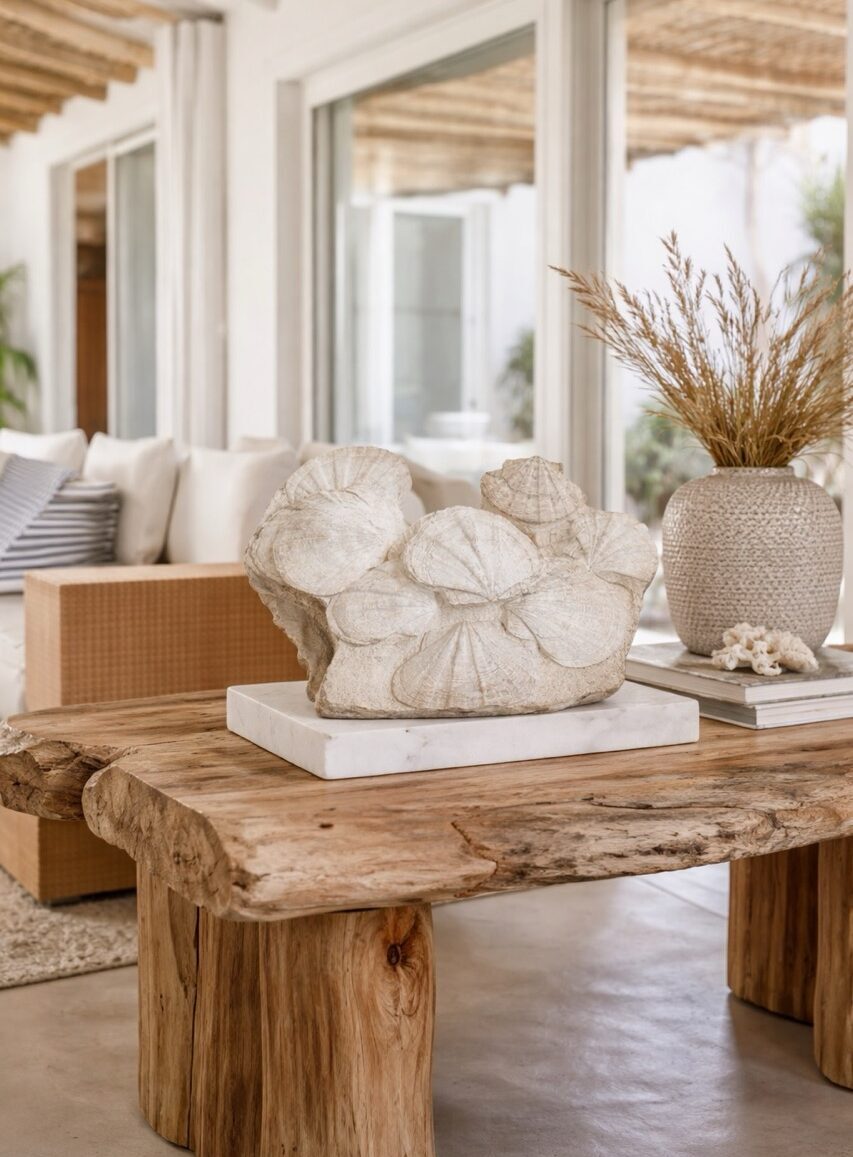
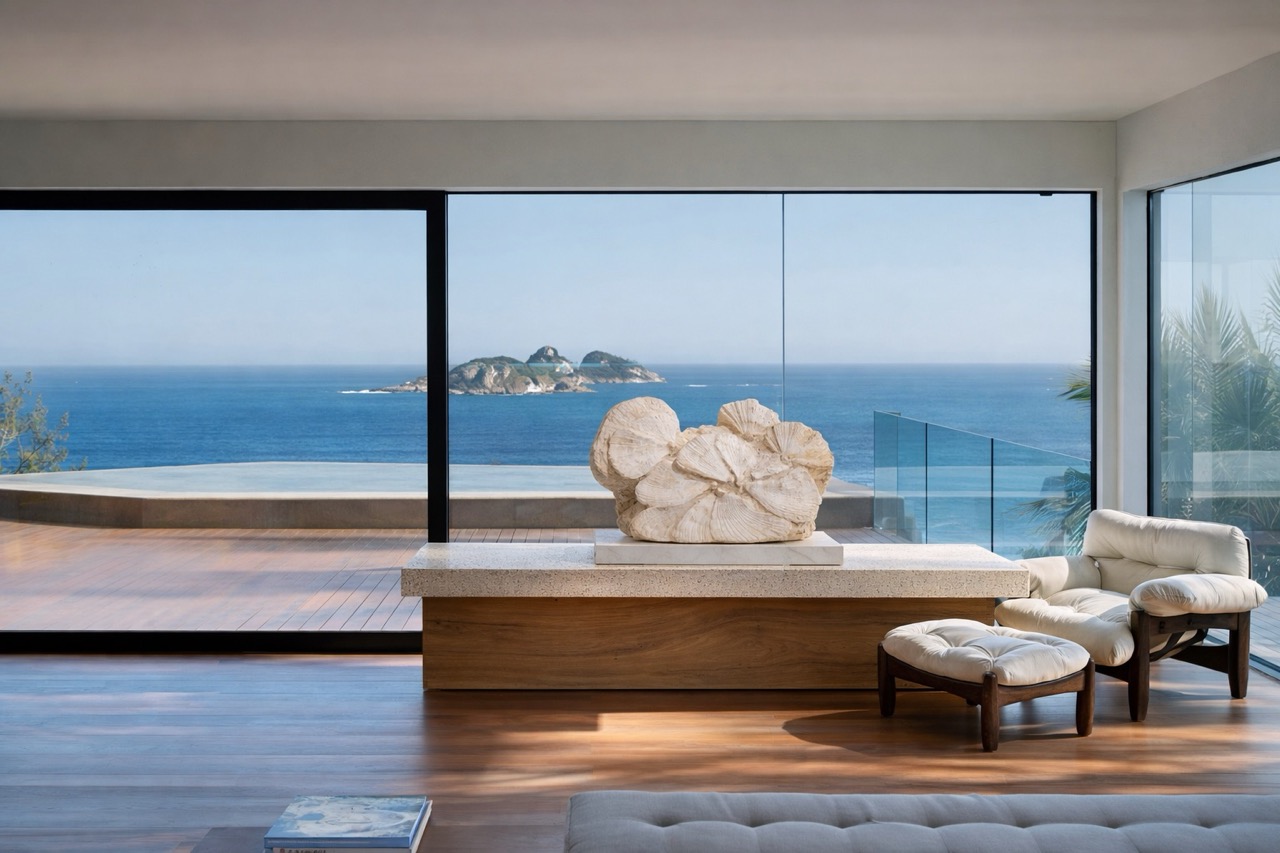
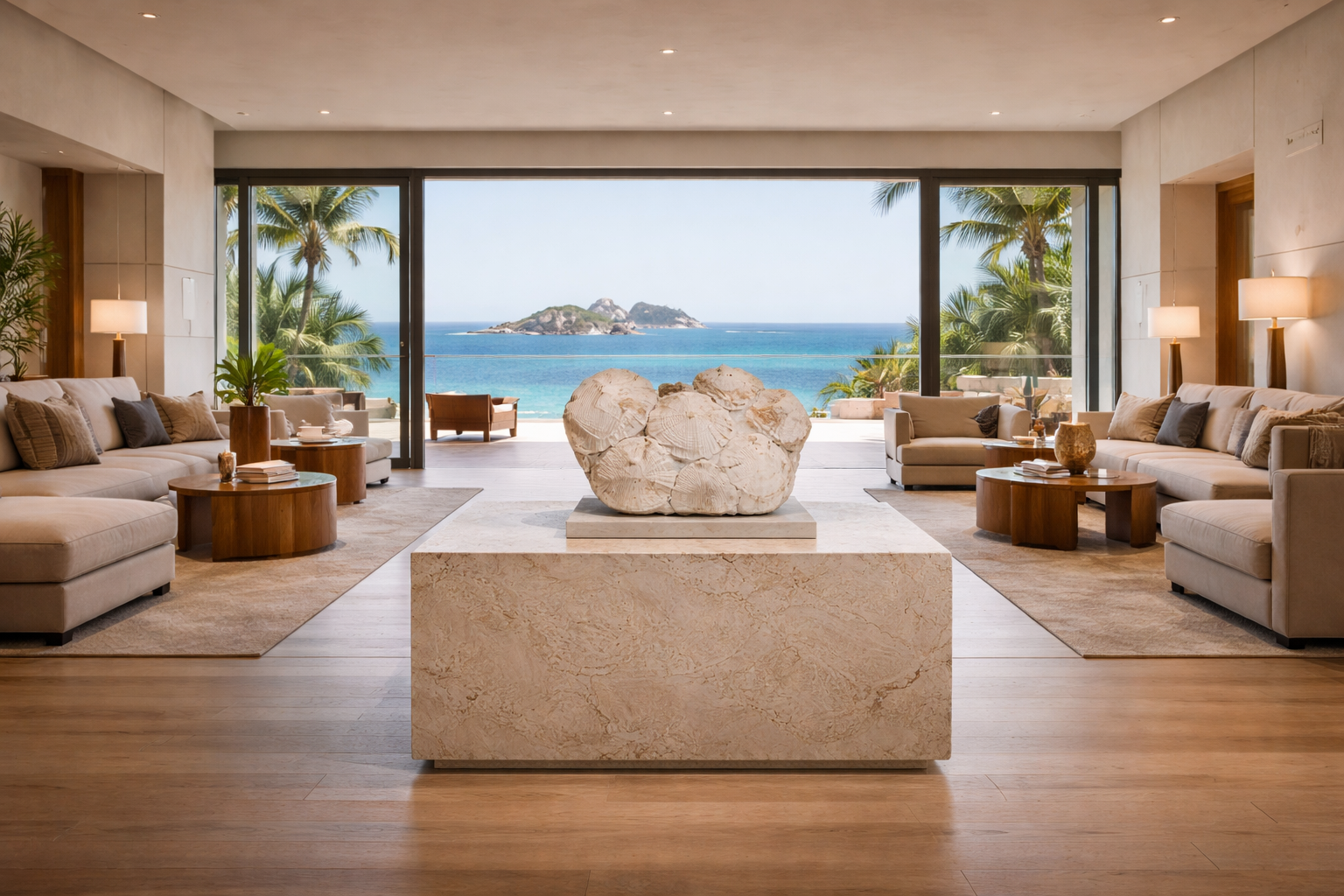
Natural aggregates of fossil scallops with a clear and bright hue, from the area of Valclouse. The sharp, harmonious lines of the shells create an elegant composition that can reflect light and visually lighten the space. Embedded in an interior design, the Gigantopecten become sculptural surfaces with a refined character, ideal for both classical and contemporary settings, where they bring brightness, balance and a sophisticated material essentiality.
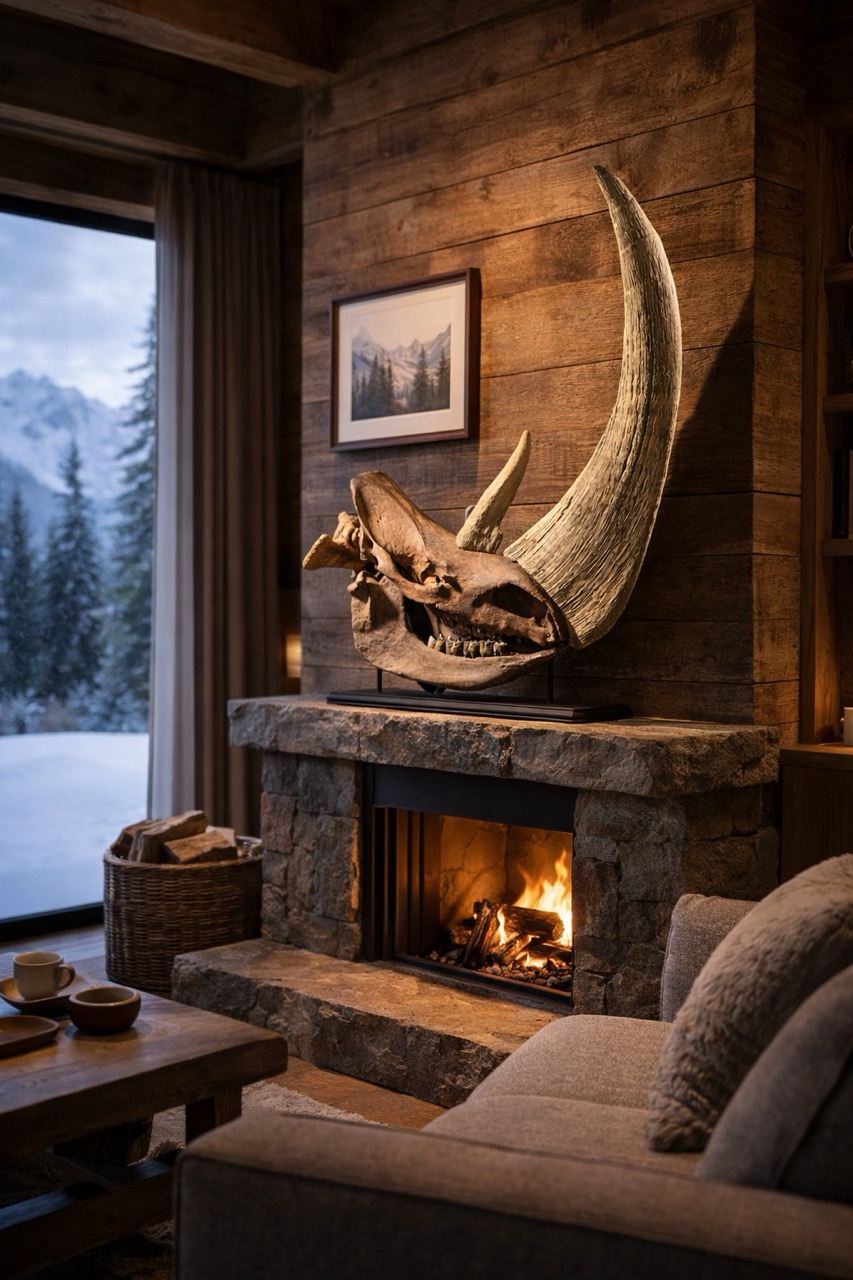
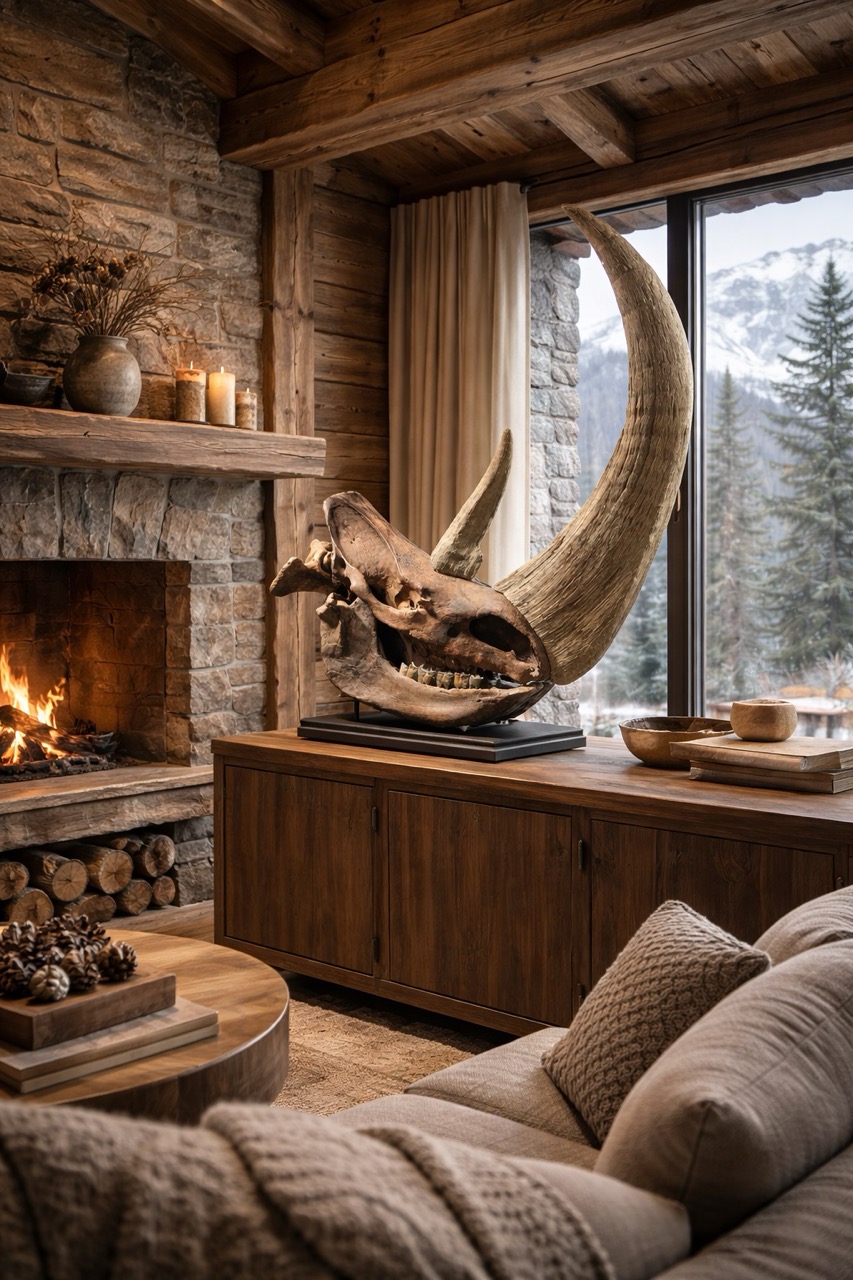
Fossil skull of woolly rhinoceros
Coelodonta antiquitatis
Impressive find of the megafauna of the Pleistocene, which lived during the last Ice Age and became extinct about 14,000 years ago. Often found in the permafrost of the Siberia, this skull is characterized by fused nasal bones and a powerful structure, adapted to extreme climates and life alongside mammoths. Its textural and authentic presence makes it particularly suitable for warm, cozy and mountain environments, where the fossil becomes a narrative element, capable of conveying strength, memory and a sense of time.
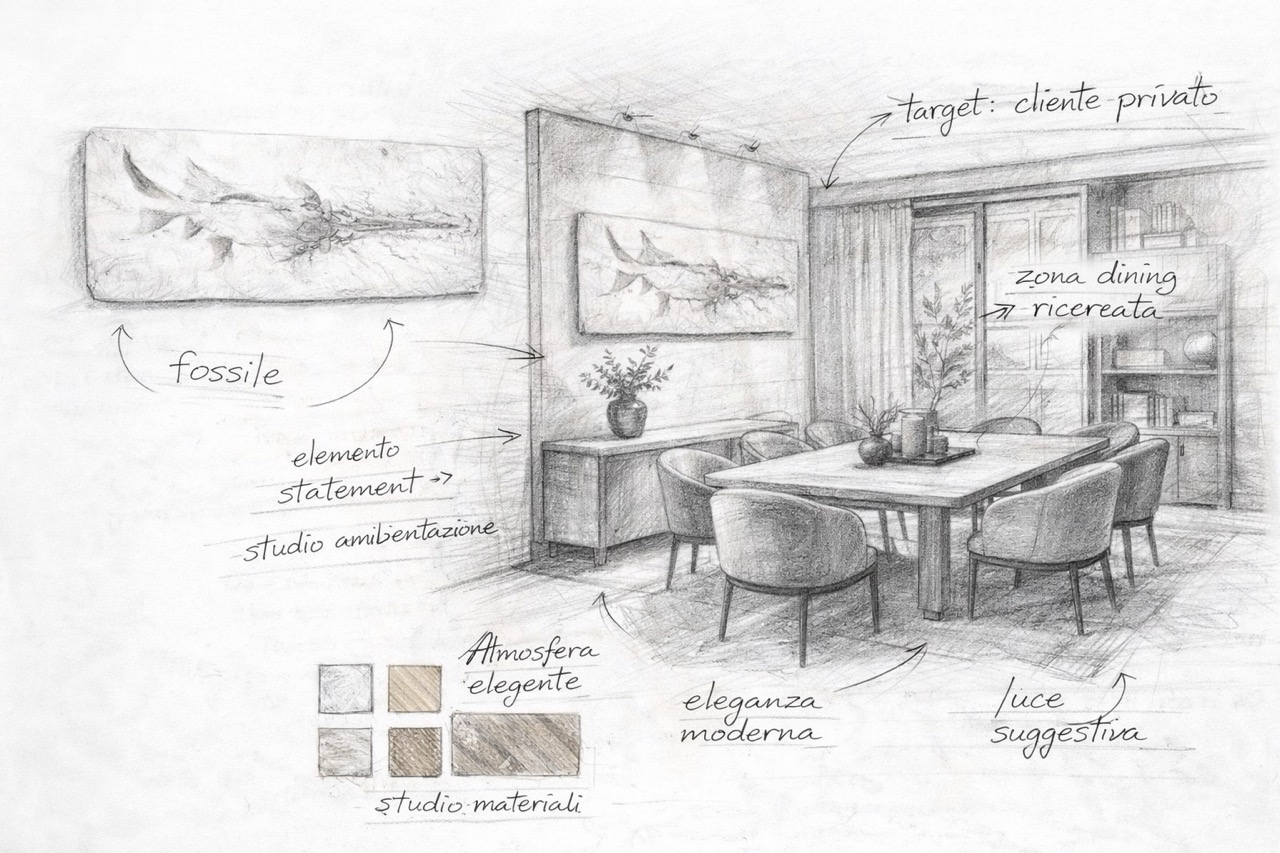
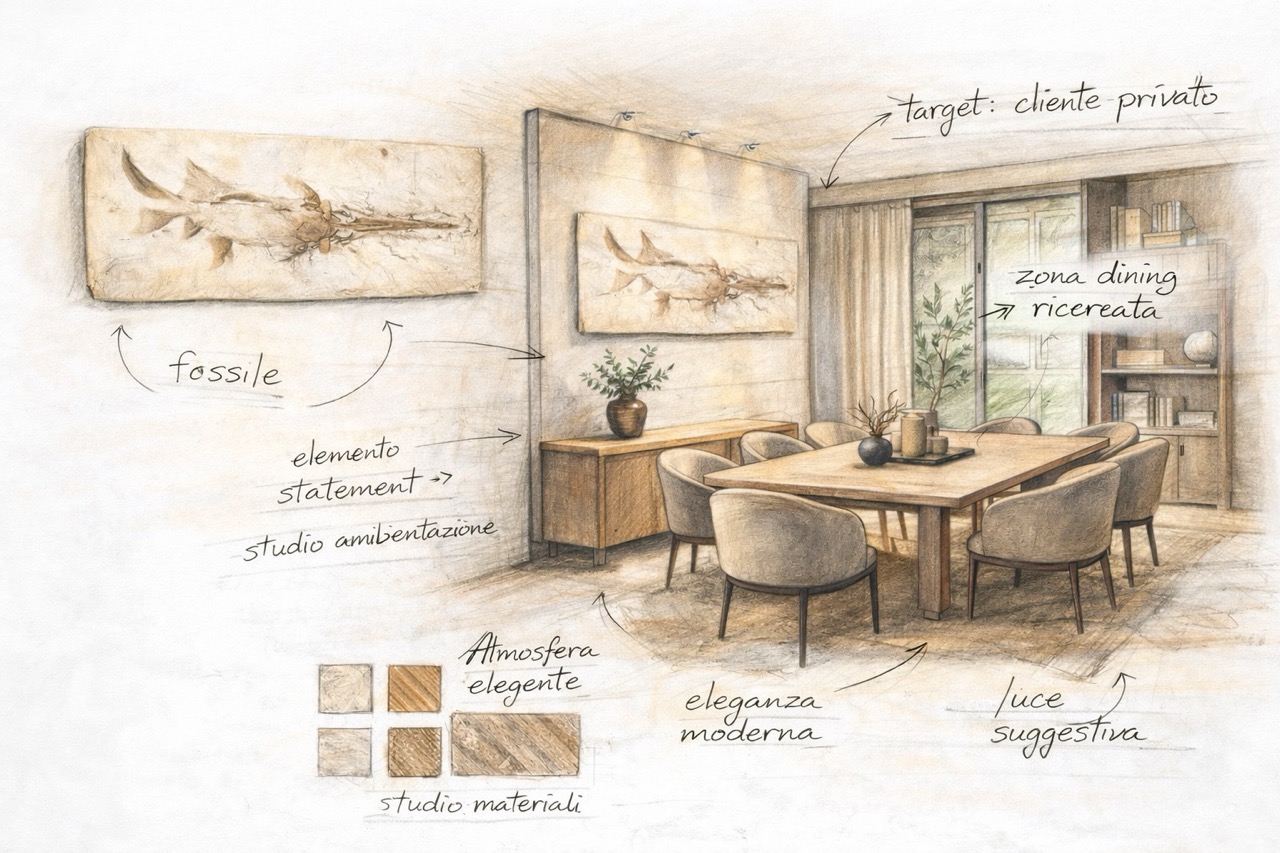
Fossil fish in slab
Fossil fish in slab
Delicate imprints of a remote time, capable of dialoguing with very different environments. Slabs with fossil fish fit naturally into both contemporary and minimal contexts and warmer and more refined spaces, offering a subtle balance between matter, sign and memory. More than objects, they become narrative surfaces: silent presences that enrich the space without imposing themselves, letting the project speak as a whole.
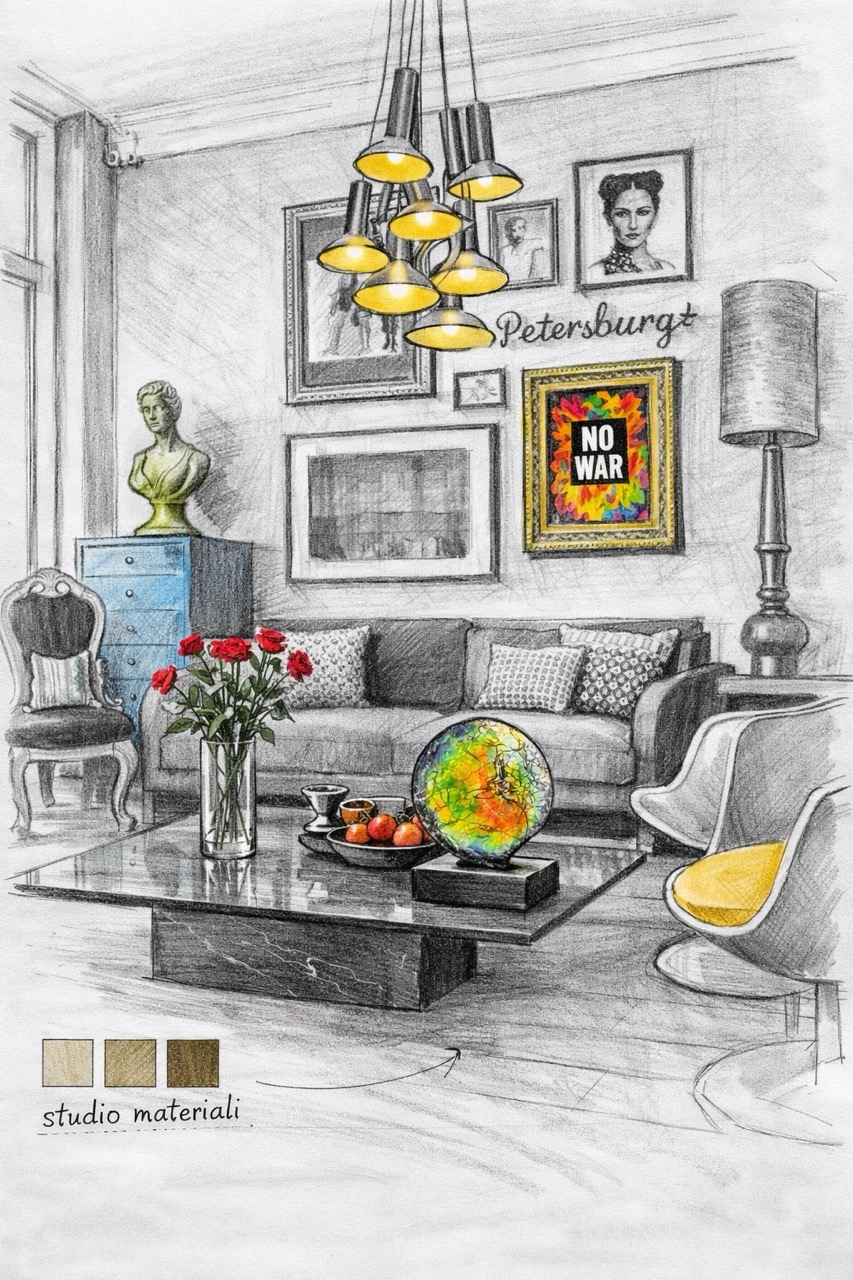
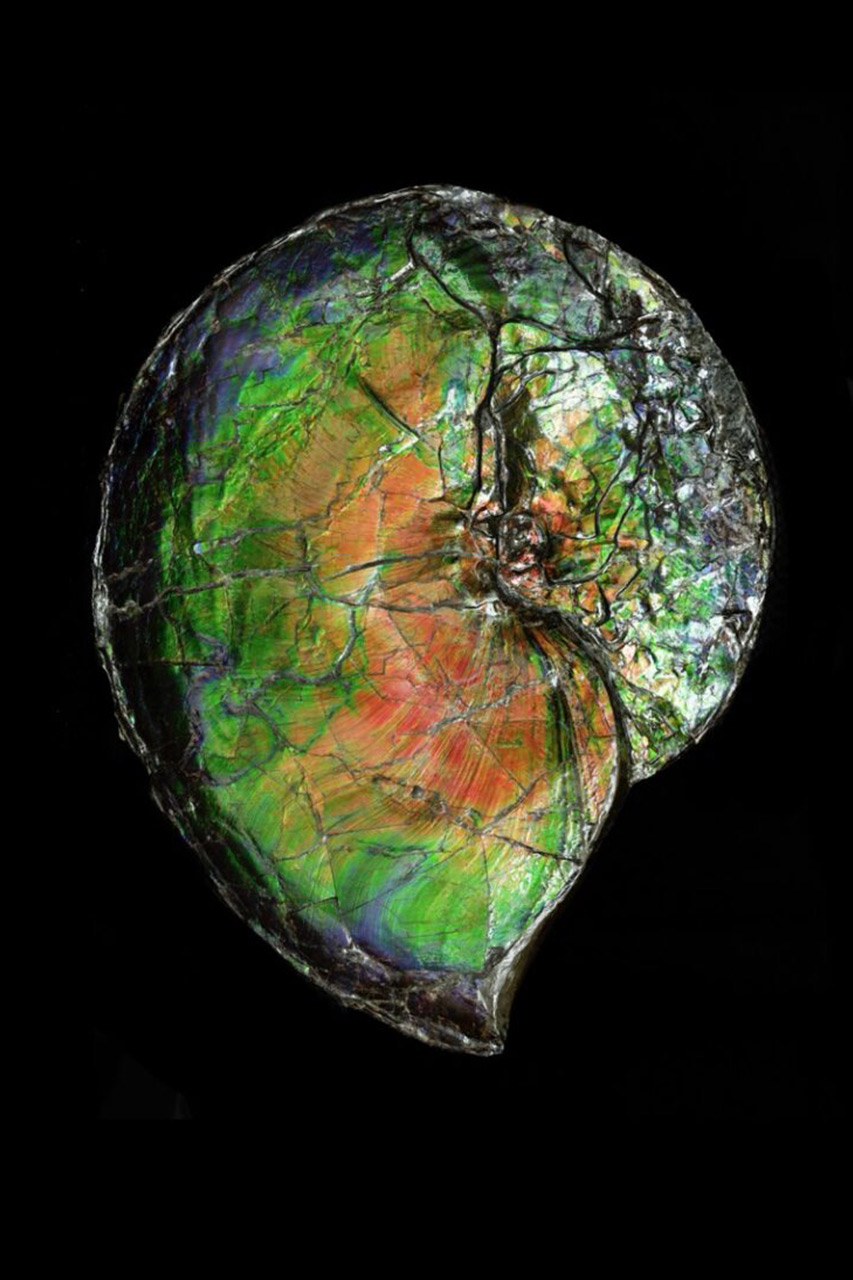
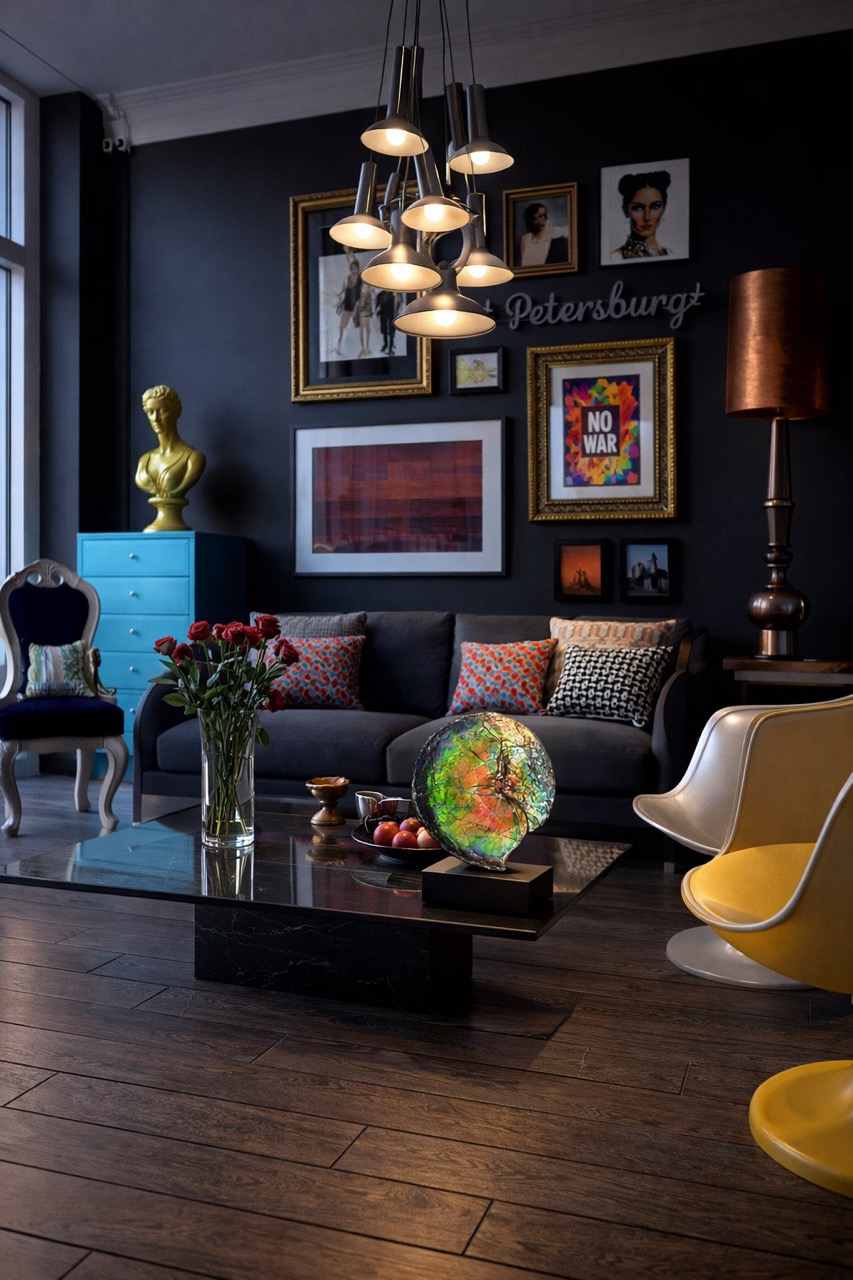
Opalized ammonite
Placenticeras
A natural element that transforms light into experience. Opalescent iridescences gently emerge, reflecting iridescent hues that give depth and movement to the space. Placed in environments luxury, wellness or hospitality, this ammonite becomes a silent focal point, capable of conveying balance, transformation and a feeling of visual well-being. Not a simple decorative object, but a luminous presence that dialogues with the architecture and amplifies the atmosphere of the environment.
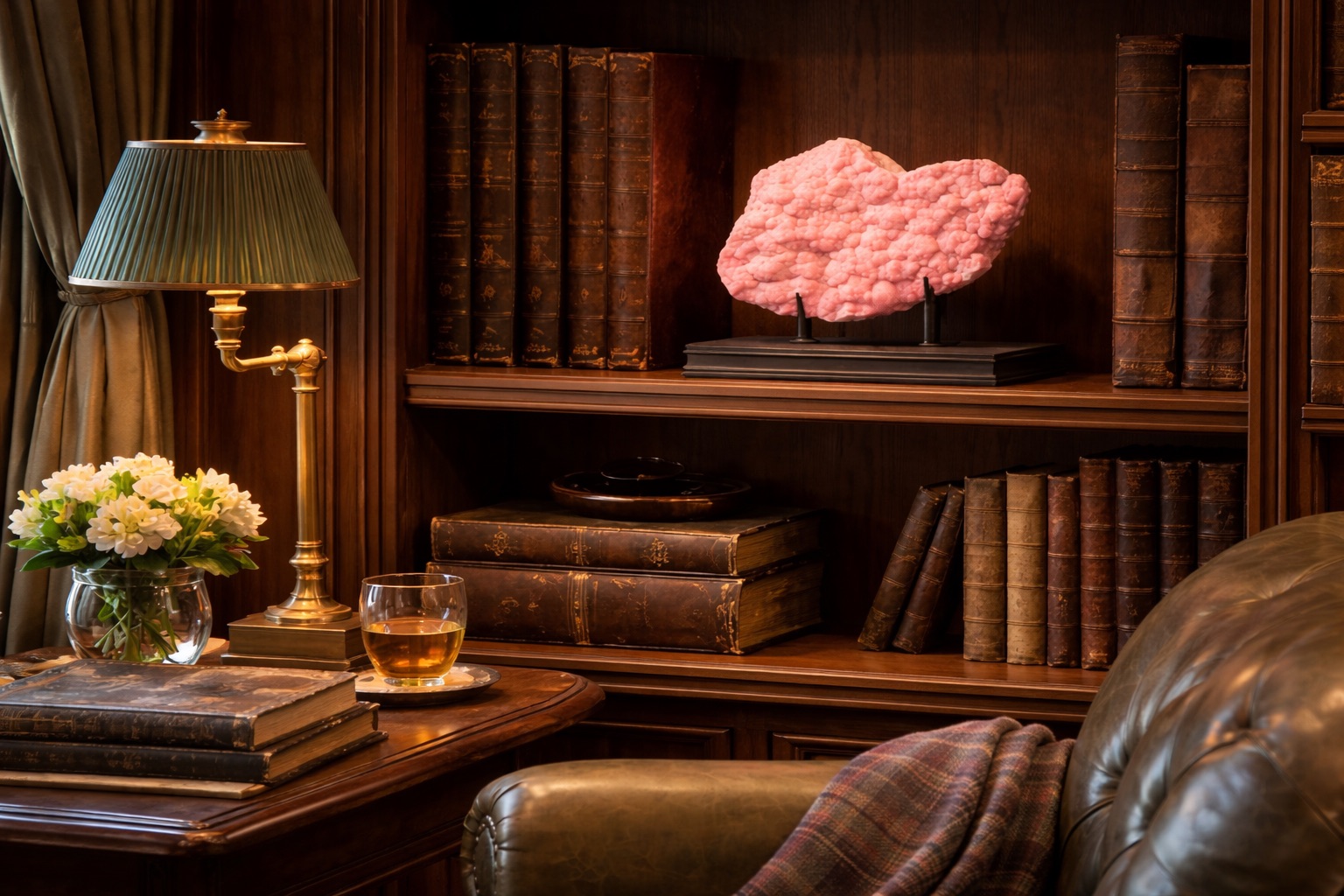
Natural minerals
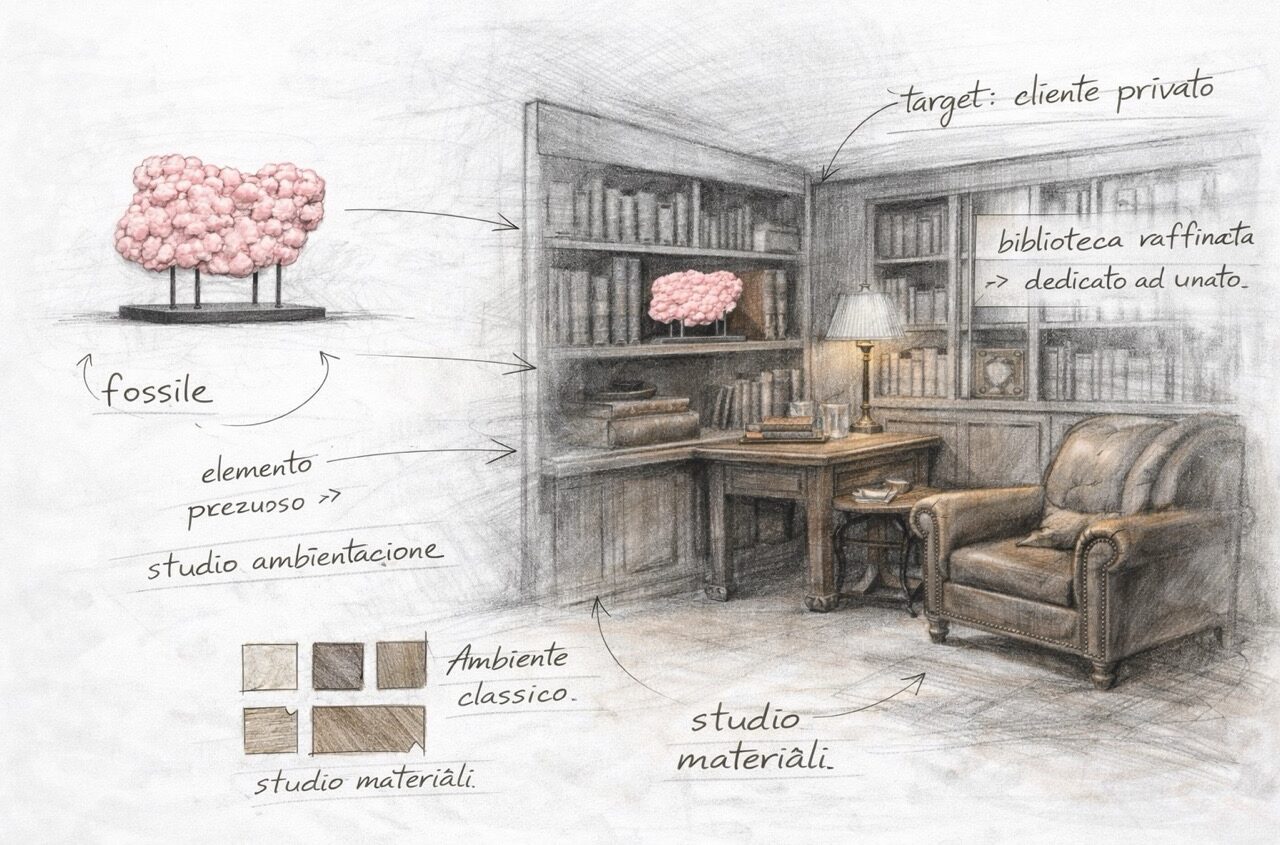
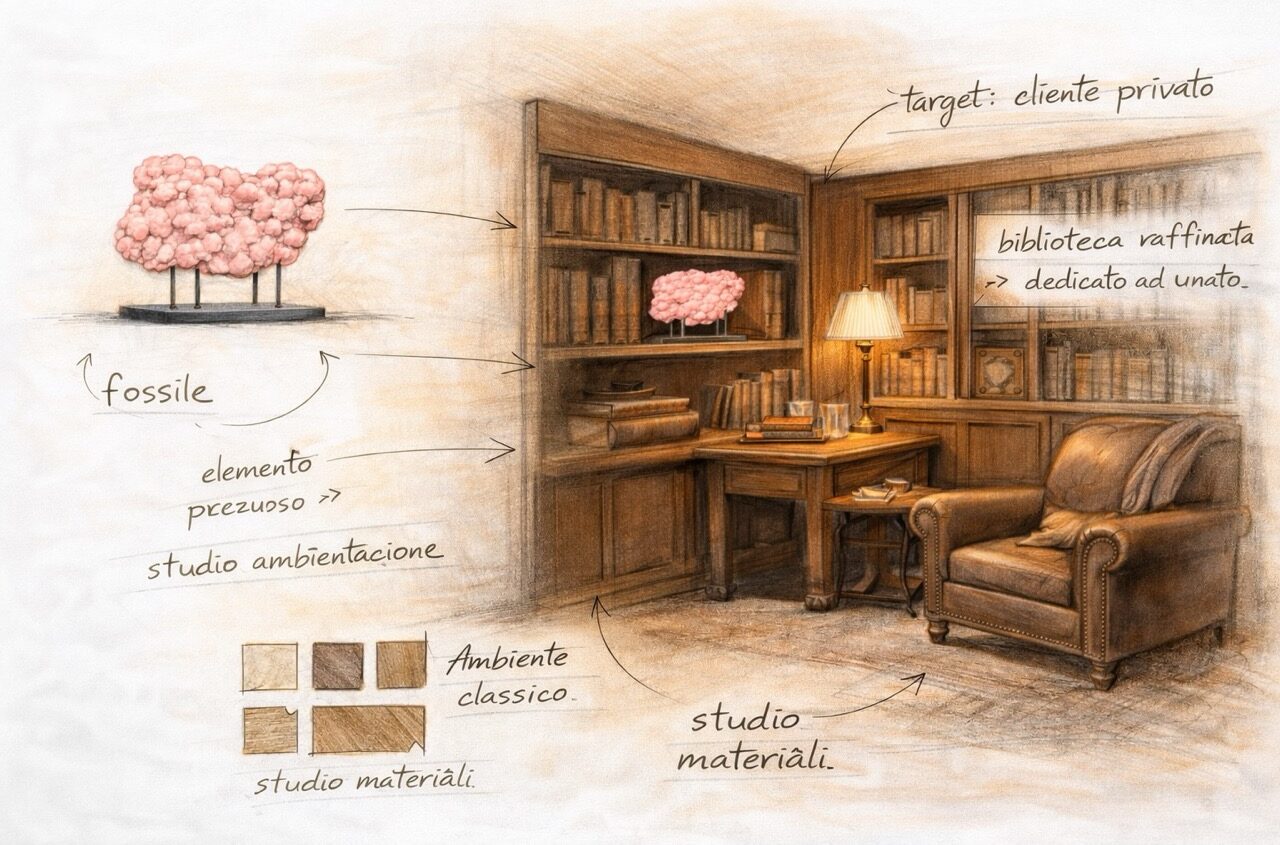
Thanks to the structure of their crystals, minerals have the unique ability to capture and reflect light, giving depth and vitality to any environment. Usable in both classical settings and modern, contemporary spaces, they dialogue with timeless materials and volumes. Their colors, transparencies and natural reflections spontaneously attract the eye, transforming light into a compositional element and making any space more intense and vibrant.
Fossil palm
Sabalites sp. - Green River Formation, USA
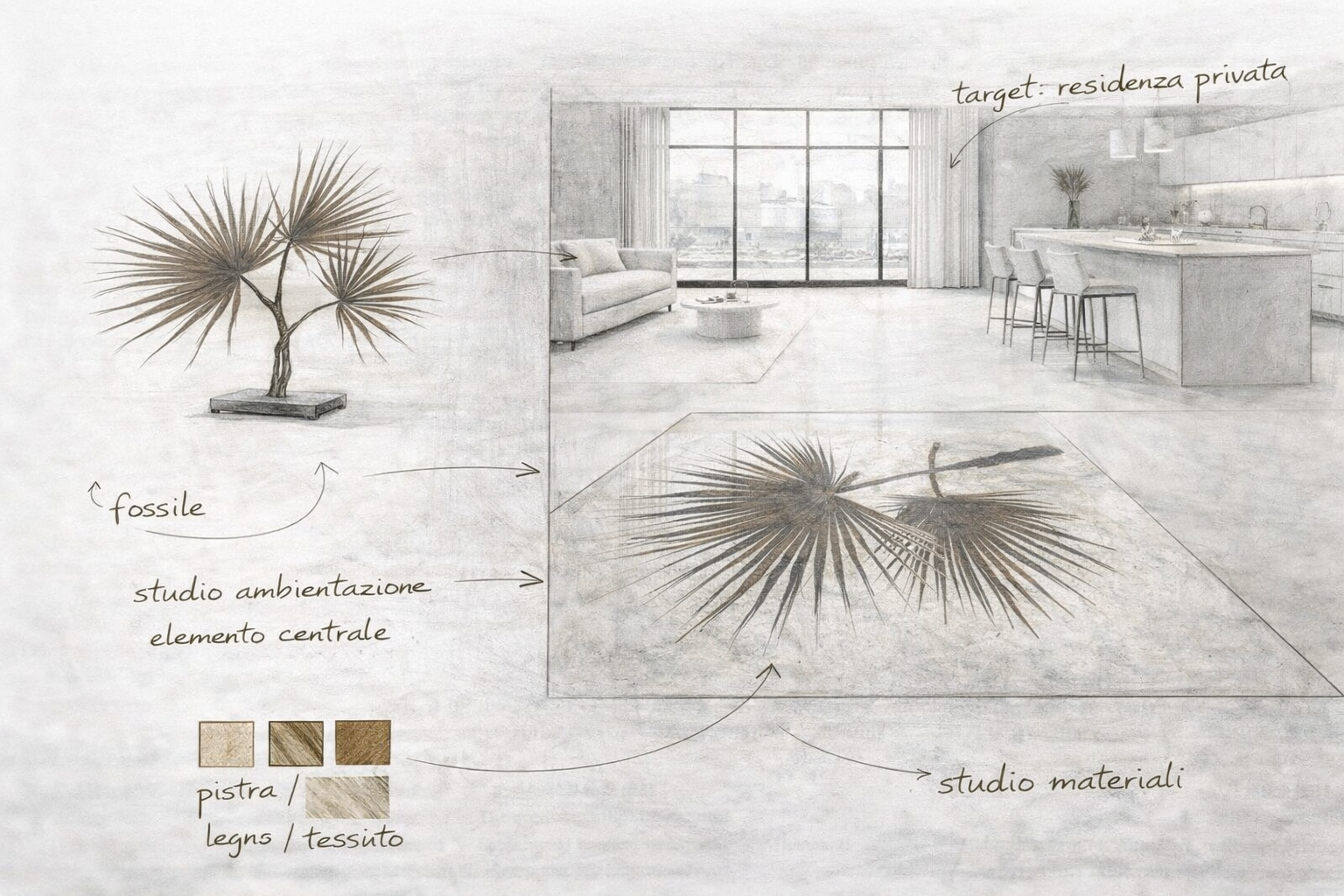
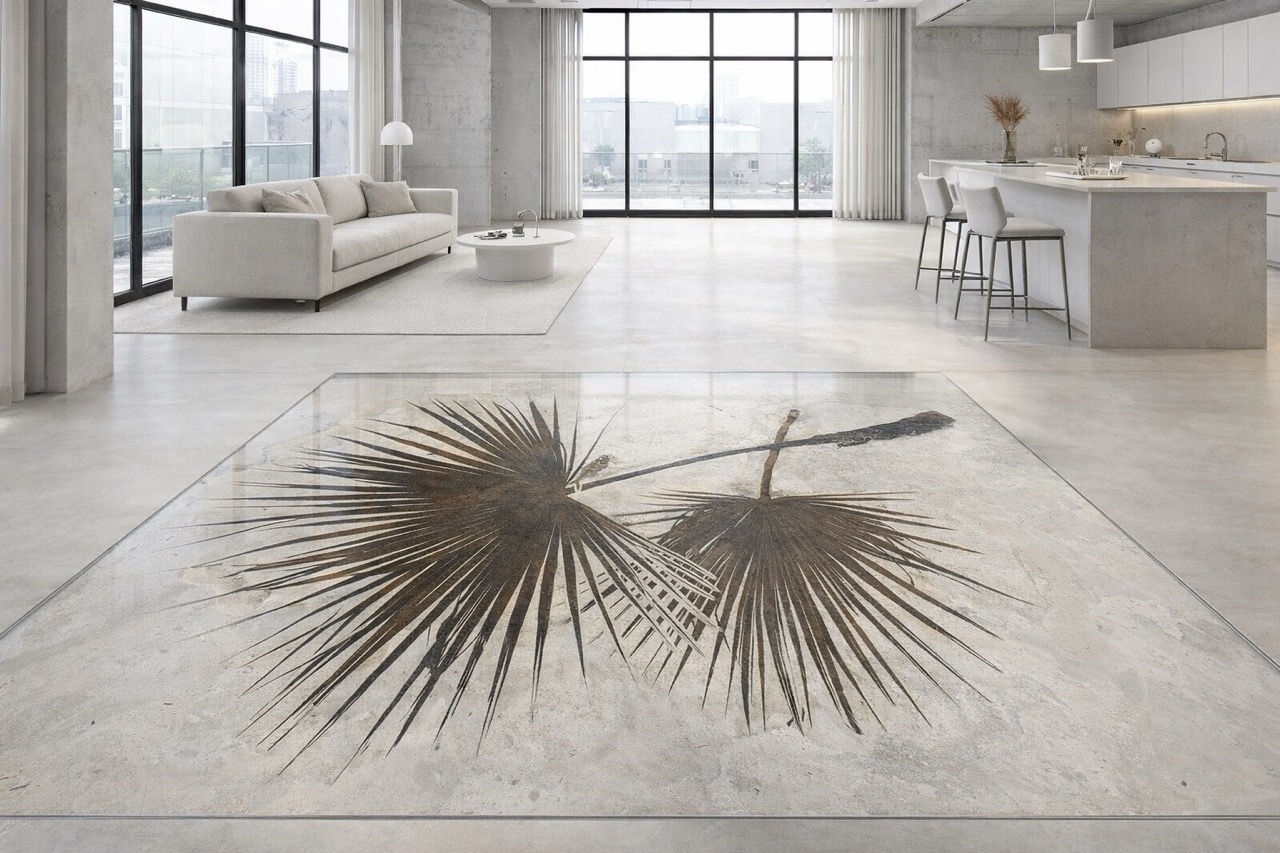
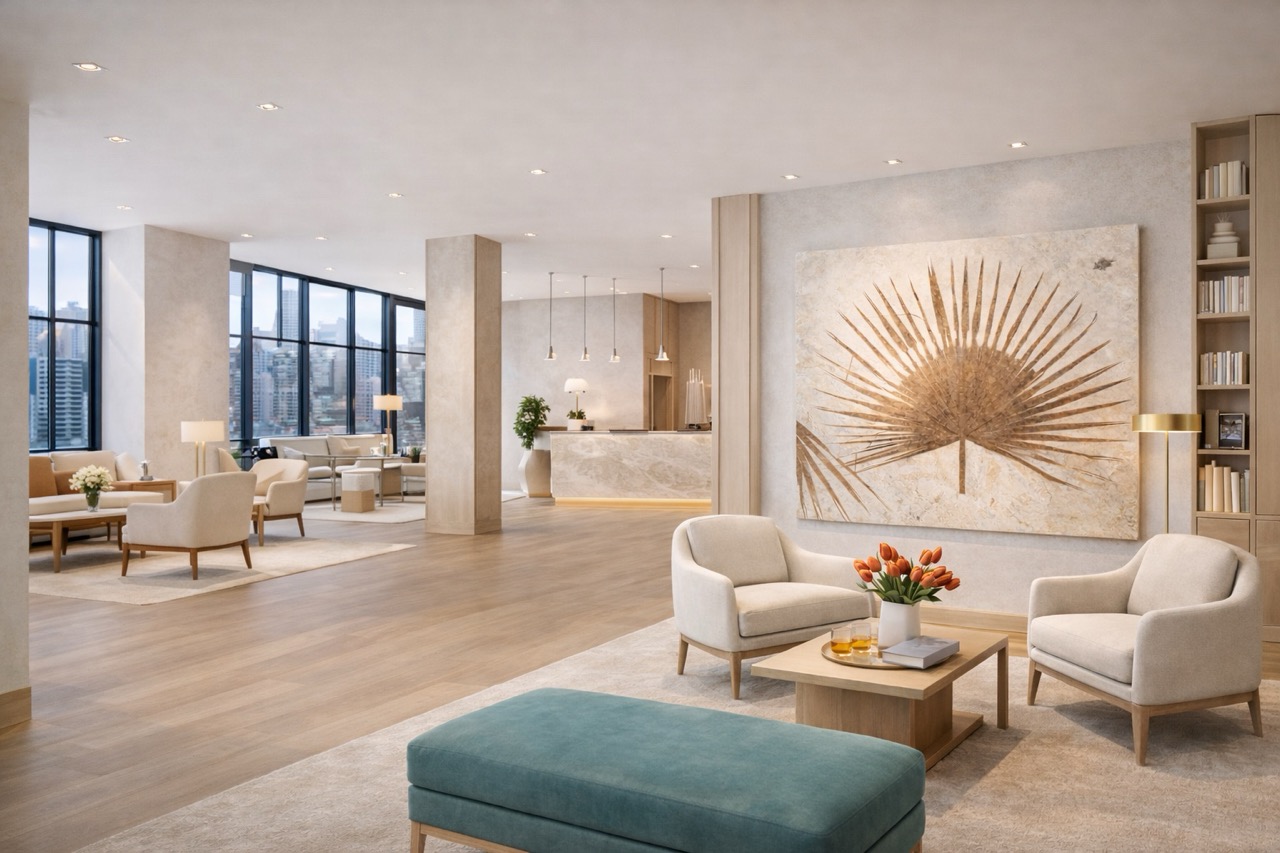
Natural imprint on slab dating back to the Eocene (about 48.5-53.5 million years). The characteristic leaves costapalmate, open fan-shaped with pronounced central ribs, return a graphic sign of great balance and decorative strength. Coming from the famous Green River Formation, this fossil palm transforms a natural find into a timeless design element where geology and interior contemporary dialogue naturally.
Mammoth Tusk
Pleistocene