


The Reconstruction of a Stenopterygius: From Stone Slab to Skeleton in 3D
Exemplary:
- Stenopterygius quadriscissus
Lower Jurassic
Holzmaden-Germany
Assembled length 270 cm
Width mounted 90 cm
Preparators:
- Manfredi Musumeci
- Noah Elzeri
- Tullio Perentin
- Paul Cinquemani
Assembly:
- Darko Fonda
Processing time:
- 80 days
Extraordinary work
The result cannot fail to amaze. Whether you are an expert, collector, technician or just curious, standing in front of the three-dimensional skeleton of a marine reptile that lived 180 million years ago is a unique experience.
Lo Stenopterygius quadriscissus, whose name means "narrow fin," was a medium-sized ichthyosaur with elongated fins and a tapered skull equipped with small teeth. Today, thanks to the experience and precision of our technicians, it has taken shape again at Zoic.
An ambitious project
The extraction and preparation of Holzmaden fossils is a complex task: the matrix consists of a laminated, dark, hard, pyrite-rich limestone, which makes the recovery of the finds particularly challenging.
Three-dimensionally reconstructed ichthyosaurs are rare, so it was essential to carefully analyze the arrangement of the bones within the slab and verify the completeness of the skeleton. An essential step to predict the final result and set up the extraction work.
Let's dispel a false myth: finding a complete and well-preserved fossil is an exceptional event
The extraction of bones from the rock matrix
After studying the location of the skeleton, the delicate extraction process began. Using micro-chisels, each bone was progressively freed from the rock with extreme precision. This time-consuming and complex step made it possible to draw up a detailed diagram of the available bones, which was essential for the subsequent three-dimensional reconstruction.

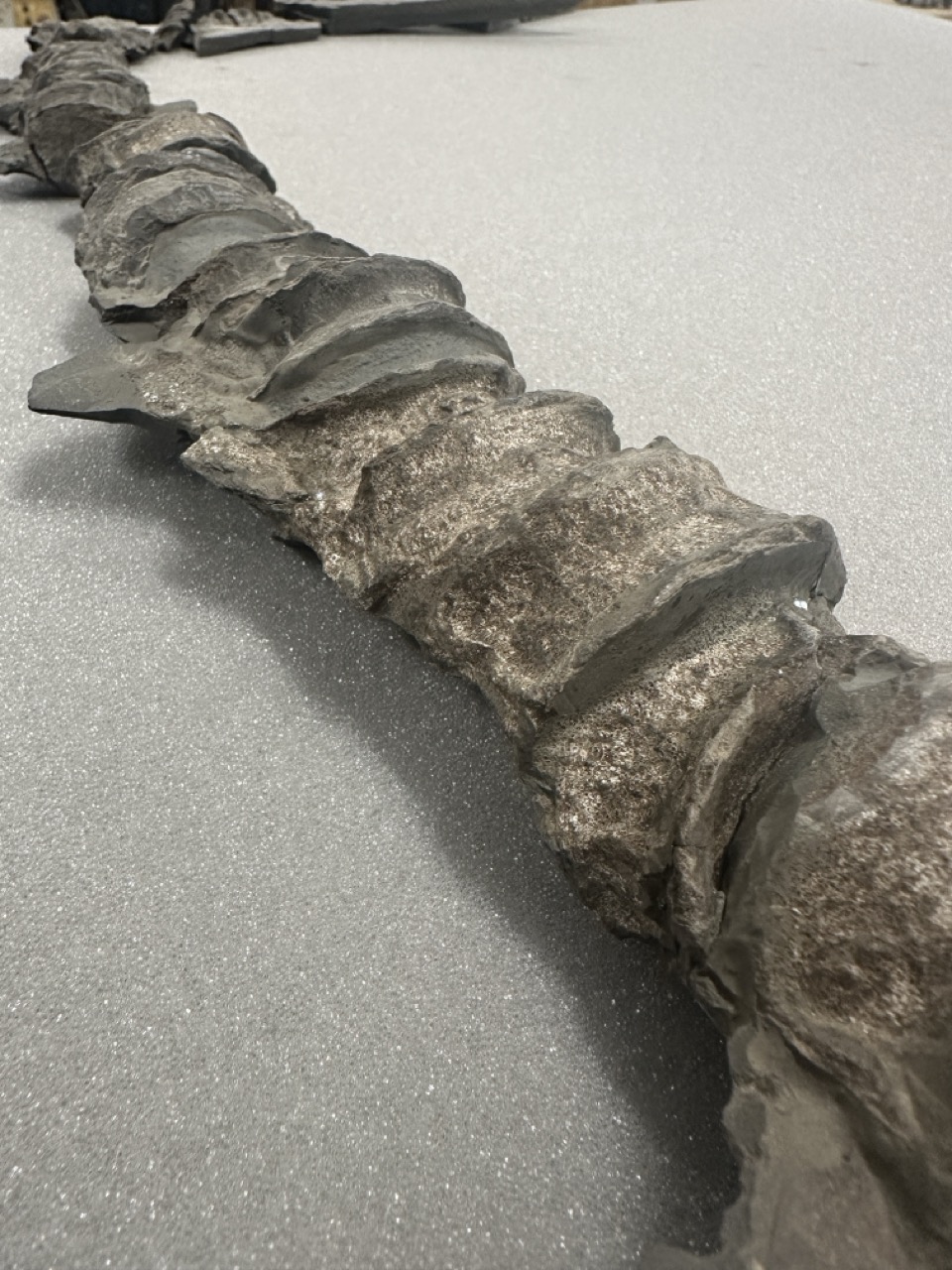
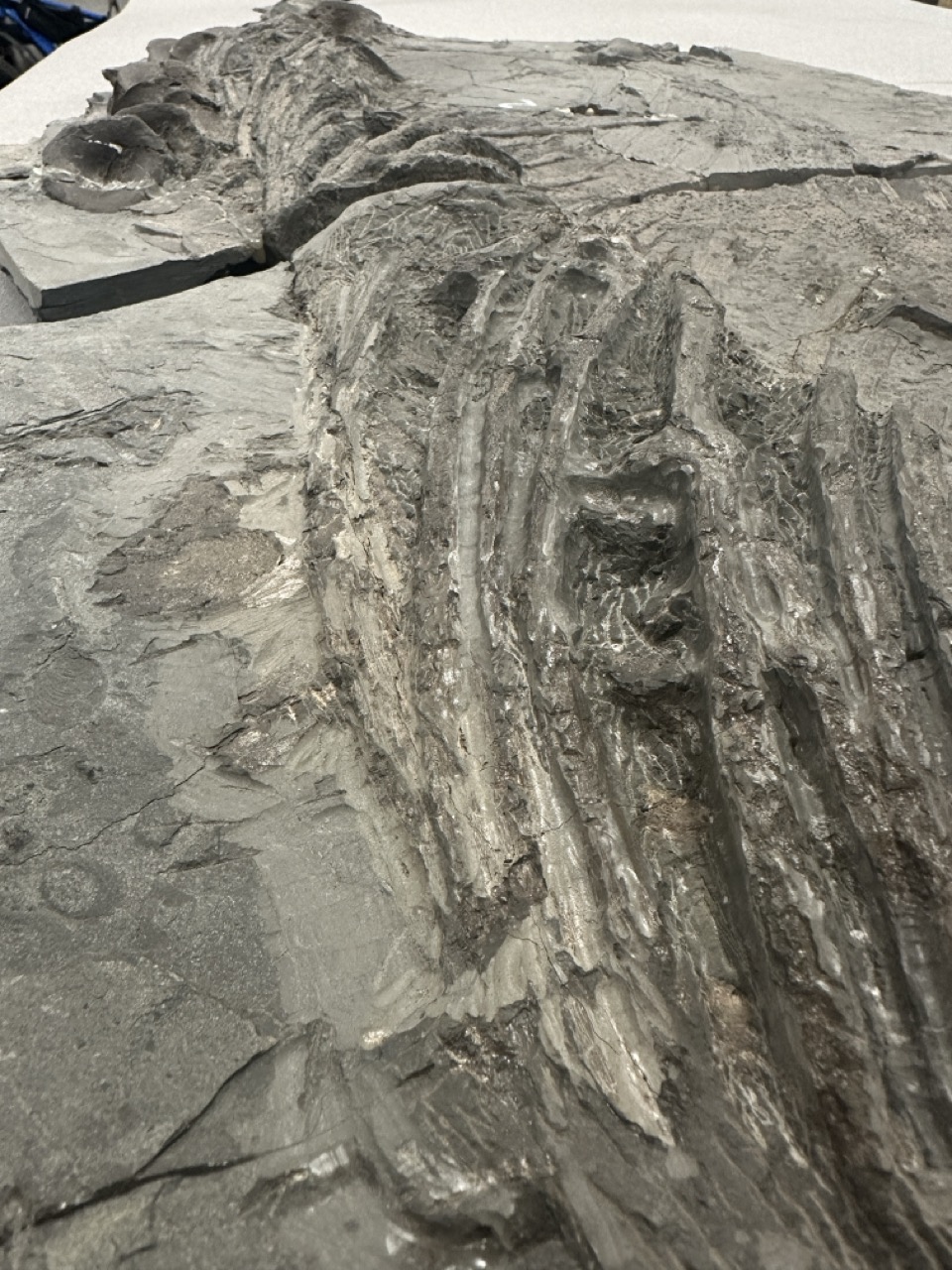
Once extracted, the bones were thoroughly cleaned to remove rock debris and consolidate the more fragile parts. The fractures were restored with compatible materials, always respecting the original integrity of the fossil.
What about the missing bones? Their reconstruction is a delicate phase that requires hours of study of the animal's morphology. Experience and consultation of scientific literature are essential to ensure an accurate result
The 3D assembly of the skeleton
In addition to preparing the bones, another crucial aspect was the three-dimensional assembly. It is not just a matter of assembling the bones, but of recreating a realistic and dynamic posture that restores the vitality of the animal in motion.
Assembly is a team effort: discussions are held, hypotheses are compared, weights and stability of the structure are studied. Some parts are integrated directly into the support structure to facilitate transportation and ensure the safety of the artifact.
Our goal? To make a skeleton that is faithful to anatomical reality, but also aesthetically appealing. This is one of the hallmarks of our work: Zoic mounts are characterized by dynamic and realistic postures that bring new life to these ancient predators.
Part of the work of assembling and fabricating the structure takes place in the process, with some parts of the skeleton being integrated directly into the structure to allow easy and safe transportation. The support is made, the weights are studied according to the chosen posture, and the grafts necessary to hold the individual bones are created. This is patient and meticulous work that often has to be revised and recalibrated in progress to create a three-dimensional skeleton faithful in movement to reality.


The result? Extraordinary.
After 80 days of work, the Stenopterygius skeleton is ready to be admired. It is a breathtaking work that tells the story of a past millions of years distant.
